Leak investigation
Meter behavior, surfacing water, pressure loss, valve status, site history, and targeted field investigation.
Underground fire service mains · Austin, Texas
H2O investigates, services, repairs, and coordinates testing for the private underground water supply that hydrants and fire-protection systems depend on.
Urgent fire-water issue? Call (512) 755-7318
Below-grade fire water
The underground fire line carries water from its connection or control point to private hydrants, sprinkler risers, and related fire-protection infrastructure. A leak, restriction, failed valve, damaged connection, or incomplete test can affect an entire property's fire-water readiness.
Texas regulates companies that sell, install, maintain, service, or certify underground water supply piping for fire-protection sprinkler systems. H2O holds Sprinkler Certificate of Registration–Underground SCR-U-3496702 and combines that fire-water scope with Texas Master Plumber oversight.
We help owners and contractors define the problem, locate the likely repair boundary, coordinate excavation and shutdown conditions, complete work within our licensed scope, and assemble the field documentation needed for the next inspection, test, or project milestone.
Field scope
Every project begins with ownership, system boundary, authority, impairment, and design responsibility—not just the wet spot.
Meter behavior, surfacing water, pressure loss, valve status, site history, and targeted field investigation.
Damaged piping, fittings, thrust restraint, hydrant leads, service connections, and valve-related repair scopes.
System isolation, hydrant replacement or repair, post-indicator and sectional valve context, and return to service.
Hydrostatic test, flushing, discharge planning, witnessing, and certification coordination when required by the project.
Field scope, constructability, excavation, connections, material requirements, and coordination with qualified design professionals.
Field records, test information, repair details, photos, material data, and handoff for the applicable authority or contractor.
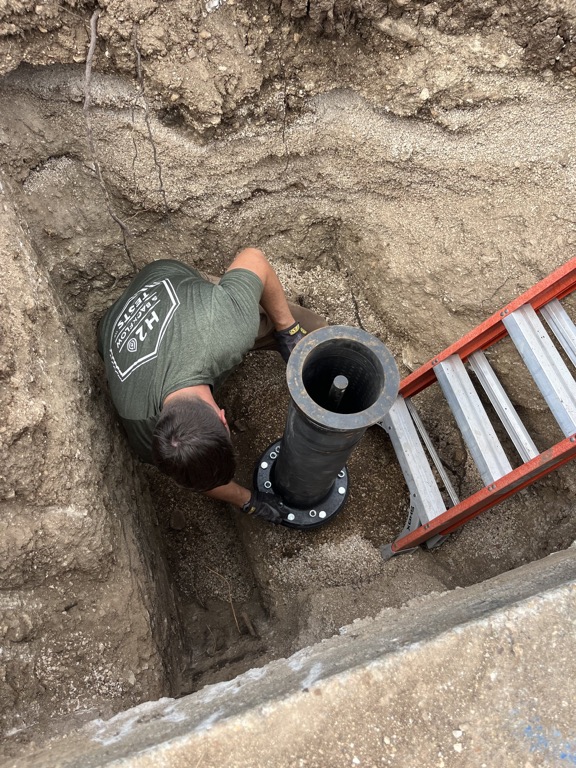
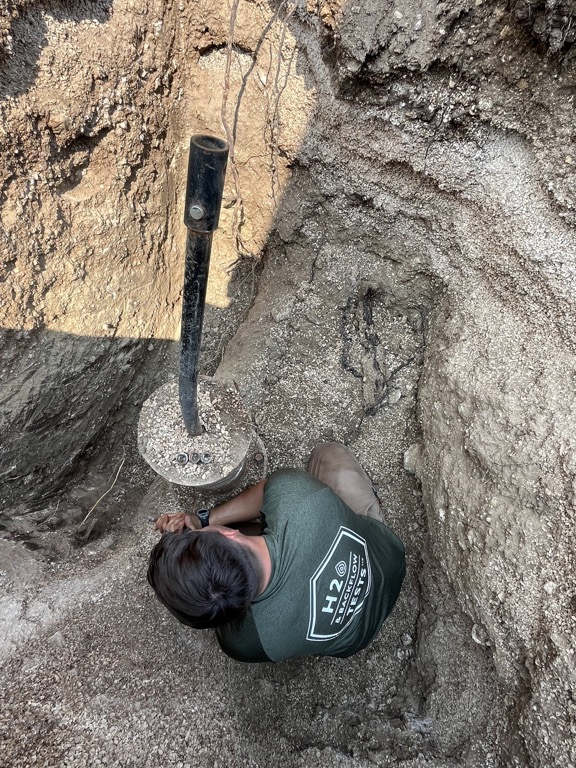
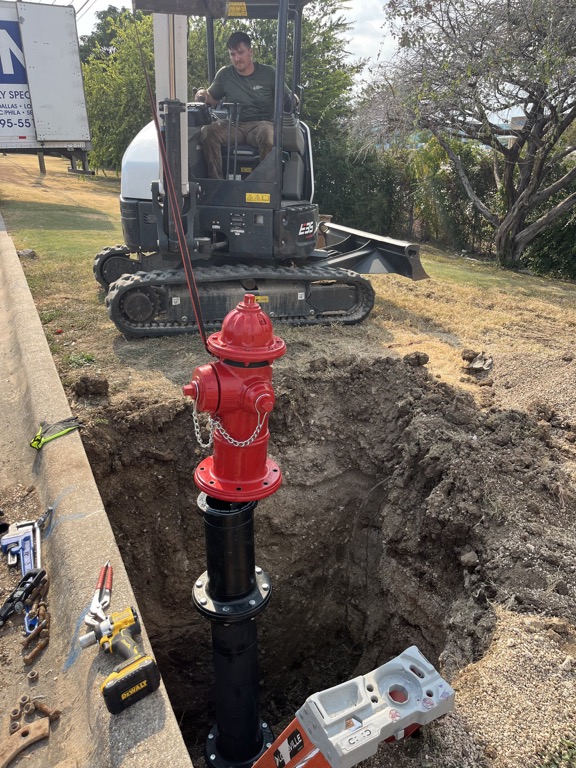
Real H2O field project · Central Texas
This field sequence keeps the below-grade preparation, connection, and installed riser visible long enough to document the private fire-water work before backfill.
Actual H2O field work. Customer identity, exact site, and test readings are not published.
Field signals
Underground problems can be quiet for weeks or show up suddenly during a test, repair, freeze, utility strike, or site project.
A dedicated fire-line or detector meter moving without a known event can indicate leakage or another system issue.
Recurring water, soft soil, pavement movement, or erosion near the fire line can justify targeted investigation.
Abnormal readings during hydrant or system testing can point to isolation, supply, leakage, or restriction concerns.
Water near a hydrant may originate at the barrel, drain, lead, valve, fitting, or main and should be traced before repair.
A new, modified, or repaired line that will not hold requires a controlled diagnostic plan before backfill or closeout.
Excavation, boring, heavy equipment, vehicle impact, utility work, or grade changes can damage piping and connections.
How H2O handles it
The best underground repair is the one with a defined system boundary, safe shutdown, realistic excavation plan, and clear test path.
We review ownership, system drawings, valve and hydrant locations, notices, test results, site contacts, and authority requirements.
Field findings, meter and pressure behavior, visible symptoms, valve status, and site history shape the investigation plan.
Shutdown, excavation, piping, restraints, valves, hydrant connections, other trades, and qualified design support are coordinated as needed.
The repair is inspected, tested or flushed as required, documented, and handed back through the applicable return-to-service process.
Properties we serve
H2O works with owners, property managers, facilities teams, contractors, and site contacts who need one accountable field partner.
Straight answers
Detailed answers for Austin property owners, facilities teams, HOAs, and commercial managers.
Ask H2O directly →It is privately owned underground water supply piping whose primary purpose is serving fire-protection infrastructure, such as private hydrants or fire sprinkler systems. The exact regulated boundary depends on the system connection and applicable Texas rules.
The Texas Department of Insurance says companies that sell, install, maintain, service, or certify underground water supply piping for fire-protection sprinkler systems must hold a Sprinkler Certificate of Registration–Underground. H2O holds SCR-U-3496702.
H2O performs leak investigation and coordinates appropriate locating methods based on meter behavior, surface evidence, test results, system layout, valves, pipe material, and site conditions. Not every leak can be pinpointed without staged investigation or excavation.
Yes, when the work falls within H2O's licensed scope. The repair can involve piping, fittings, restraints, valves, hydrant leads, or connections and may require shutdown planning, excavation, testing, and other qualified contractors.
H2O can perform or coordinate pressure testing, flushing, discharge planning, and field documentation when those activities are part of the approved project scope. The required procedure and witnessing depend on the project, authority, and system.
Underground fire-line design or planning may require a qualified fire-sprinkler company, registered professional engineer, civil designer, utility approval, or other authority-specific professional. H2O handles field and licensed underground scopes and coordinates design responsibility before construction.
Protect the area, notify the property and fire-protection contacts, and call H2O with the address and observed conditions. Do not operate unfamiliar fire-system valves. The property may have impairment, emergency, insurer, or fire-authority procedures to follow.
Yes. H2O provides private hydrant testing, hydrant diagnosis and repair, underground hydrant-lead work, and post-repair testing, which helps keep one accountable team across the connected system.
Send the property address, system or utility drawings, test reports, leak history, photos, hydrant and valve locations, meter information, prior repair records, authority notices, access constraints, and the site contact who understands operations.
One connected fire-water team
Move between the four fire-water service paths without starting the property story over with another contractor.
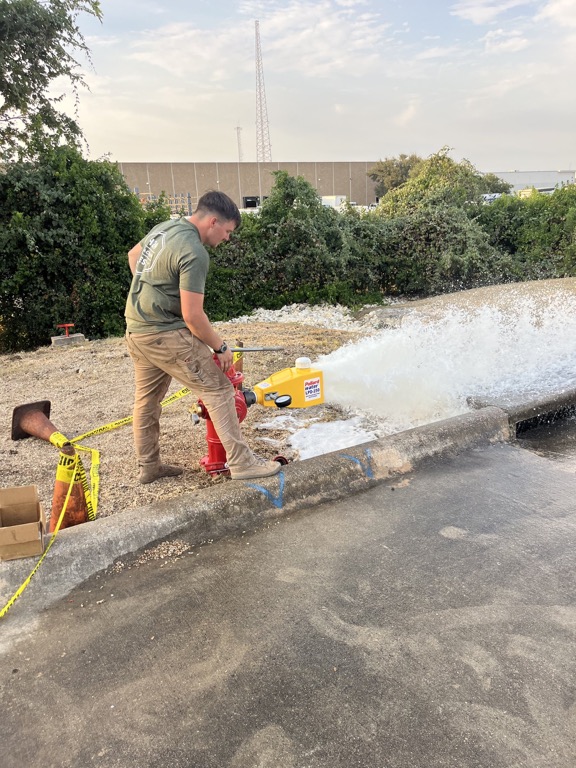
Inspection, operational checks, pressure and flow data, and reporting support.
View service →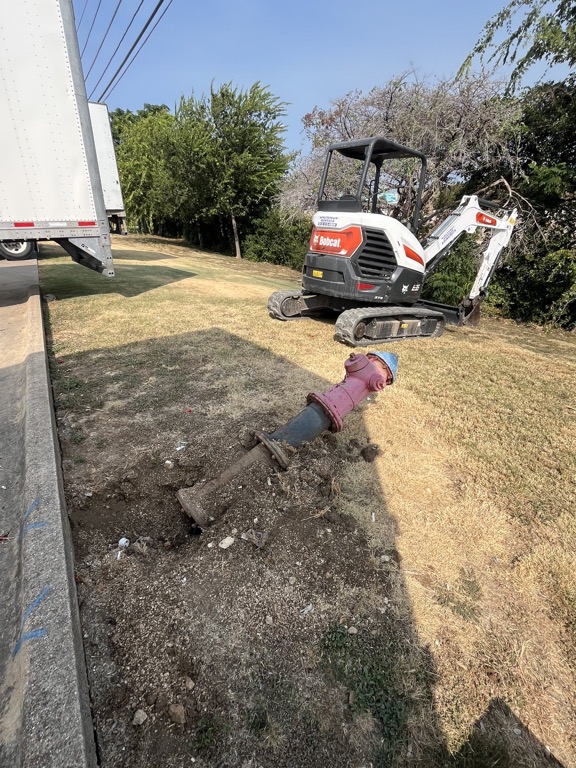
Diagnosis and repair for leaks, seized mechanisms, damaged components, and failed tests.
View service →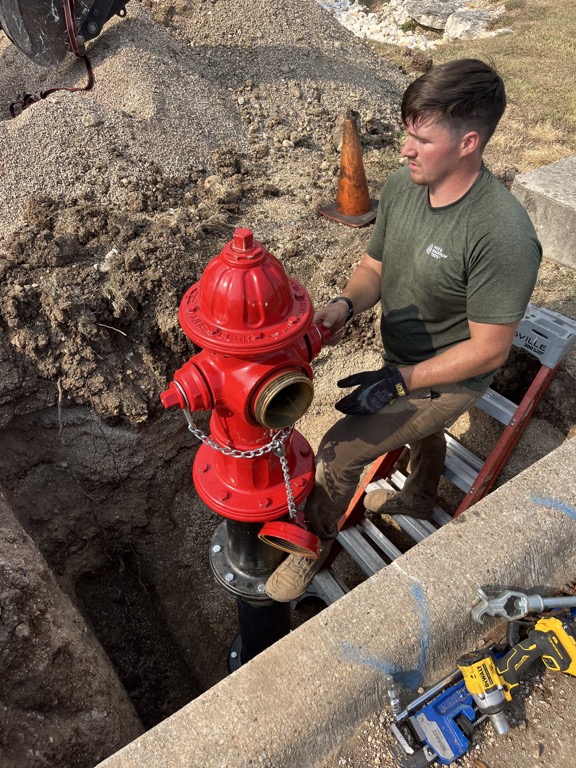
Private hydrant installation and complete replacement from connection through verification.
View service →
Licensed investigation and repair for private fire service mains, valves, leads, and connections.
View service →Central Texas coverage
Choose a city for local property context and related service information. Availability depends on scope, scheduling, and project requirements.
08 Start here
Send the Austin property address, drawings or test records, visible symptoms, and site contact. We will help define the investigation and repair path.