
Site and asset verification
Property contact, hydrant ID, manufacturer, model, location, access, and system context.
Private fire-water systems · Austin, Texas
Know whether the hydrant will operate, what the available water supply is doing, and what needs attention next. H2O inspects, tests, documents, and explains the result.
Urgent fire-water issue? Call (512) 755-7318
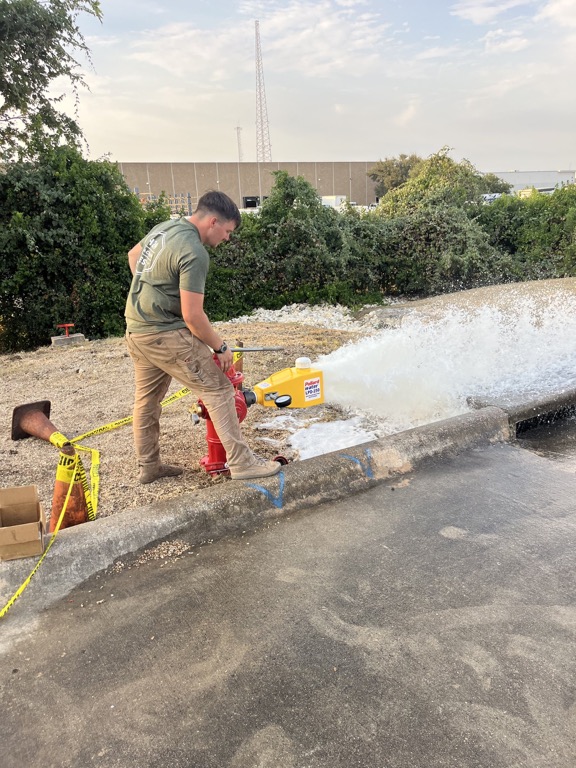
The work behind the number
Private hydrants protect apartment communities, office parks, warehouses, schools, retail centers, industrial properties, and private developments. Their condition is the property owner's responsibility, and a useful test has to account for more than whether water comes out.
H2O records the property and hydrant information, checks access and visible condition, operates the hydrant, gathers the measurements required by the applicable test plan, and documents repair needs. Where an Austin Water form or another authority's report applies, we confirm the reporting path before closing the visit.
If testing exposes a hydrant defect or a possible supply-side issue, you do not get a vague failure note. You get a practical next step—and access to the same team for hydrant repair or licensed underground fire-line work.
Field scope
The exact procedure follows the property, authority having jurisdiction, and requested report. We confirm the scope before water is flowed.
Property contact, hydrant ID, manufacturer, model, location, access, and system context.
Barrel, caps, chains, outlets, paint, clearances, drainage area, visible leaks, and damage.
Operating nut, stem travel, caps, outlets, shutoff behavior, and signs of binding or seizure.
Static, residual, pitot, duration, nozzle details, and calculated flow when the test requires them.
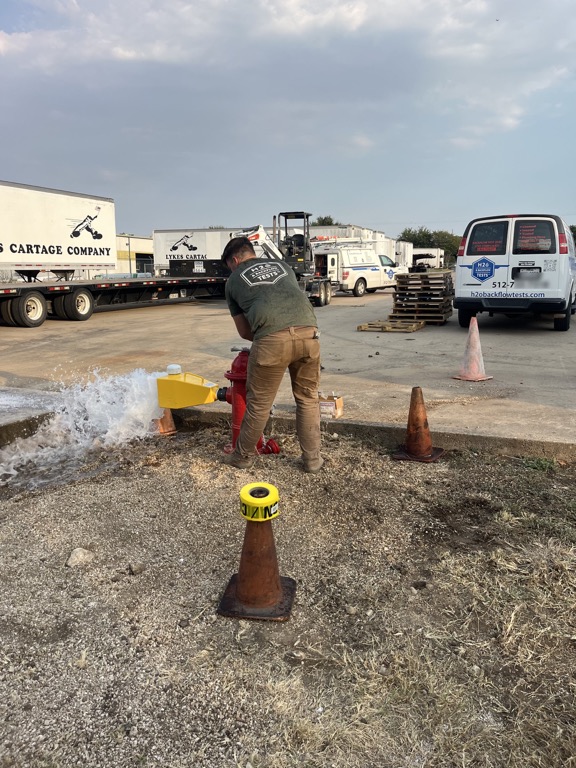
Discharge direction, runoff protection, traffic or pedestrian control, and dechlorination when applicable.
Recorded readings, condition notes, repair findings, photographs when useful, and a clear follow-up path.
Real H2O field project · Central Texas
This Central Texas commercial-property sequence shows H2O operating the private hydrant, managing the discharge area, and documenting the finished hydrant condition.
Actual H2O field work. Customer identity, exact site, and test readings are not published.

Field signals
Some problems are isolated to the hydrant. Others are evidence that the private fire-water system needs a wider investigation.
A seized operating mechanism, damaged stem, or valve problem can keep the hydrant from operating correctly.
Worn gaskets, packing, threads, caps, or internal components may need service before retesting.
The cause may be the hydrant, a partially closed valve, a supply limitation, a leak, or an underground restriction.
Water remaining in the barrel can accelerate corrosion and create freeze or maintenance concerns.
Landscaping, parked vehicles, fencing, storage, or site changes can interfere with inspection and emergency access.
Missing IDs, prior reports, system maps, or repair history can slow compliance and make recurring problems harder to diagnose.
How H2O handles it
Good testing starts before the truck arrives and ends only when the result and next action are clear.
We collect the address, hydrant count, site contact, notice or deadline, access notes, and available prior records.
We confirm the reporting authority, test scope, safe discharge area, and any operating constraints.
The hydrant is visually reviewed, operated, measured, and documented using the applicable field procedure.
You receive the result, repair recommendations if needed, and the next step for reporting, repair, or retesting.
Properties we serve
H2O works with owners, property managers, facilities teams, contractors, and site contacts who need one accountable field partner.
Straight answers
Detailed answers for Austin property owners, facilities teams, HOAs, and commercial managers.
Ask H2O directly →A private fire hydrant is connected to a privately owned fire-water system on private property. Apartment communities, HOAs, warehouses, office parks, schools, campuses, industrial sites, and retail developments commonly own them.
The property owner or operator is generally responsible for private hydrant inspection, testing, maintenance, access, and records. The exact schedule and submission path should be confirmed with the notice, water provider, fire authority, insurer, or property standard that applies.
Many compliance and maintenance programs use an annual interval, but the controlling requirement can vary. H2O confirms the requested scope and reporting authority from the property address and any notice or prior report.
Depending on the required procedure, the test can record static pressure, residual pressure, pitot pressure, nozzle size and coefficient, test duration, total flow, and calculated flow at a specified residual pressure. Operational and visual condition checks are also important.
H2O's standard single-hydrant test is a $150 flat fee. Multiple-hydrant sites and special testing, access, documentation, or water-management requirements are quoted after the property details are reviewed.
H2O is familiar with Austin Water's private hydrant documentation. We confirm the applicable form and submission path for the property, complete the field information within our scope, and explain any remaining owner or authority steps.
The report identifies the observed problem and recommended next step. H2O can diagnose and repair many hydrant defects, investigate possible supply-side issues, and retest after repairs.
Yes. Send the property address, estimated hydrant count, site map or asset list if available, access restrictions, and deadline. We can plan a coordinated route and provide a site-based quote.
This service is for privately owned hydrants and fire-water systems. Public hydrant flow-test requests and public hydrant leak or repair reports should be directed to the City of Austin or the appropriate municipal authority.
One connected fire-water team
Move between the four fire-water service paths without starting the property story over with another contractor.
Inspection, operational checks, pressure and flow data, and reporting support.
View service →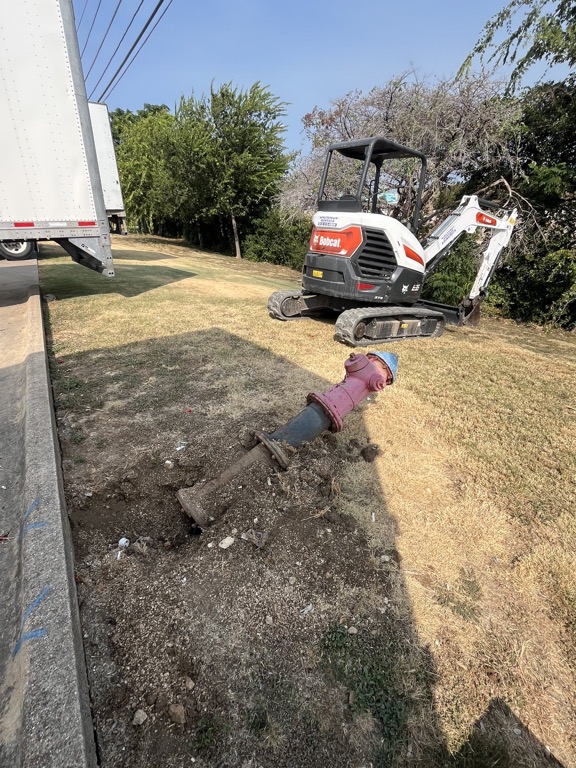
Diagnosis and repair for leaks, seized mechanisms, damaged components, and failed tests.
View service →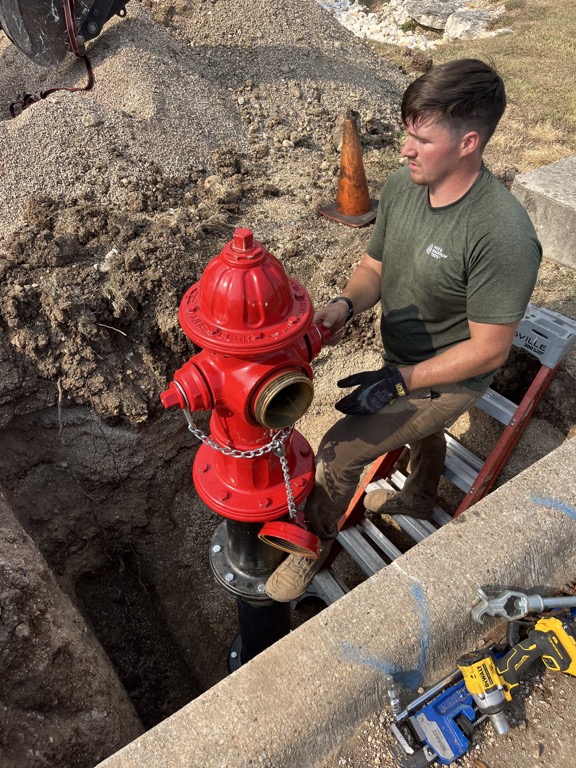
Private hydrant installation and complete replacement from connection through verification.
View service →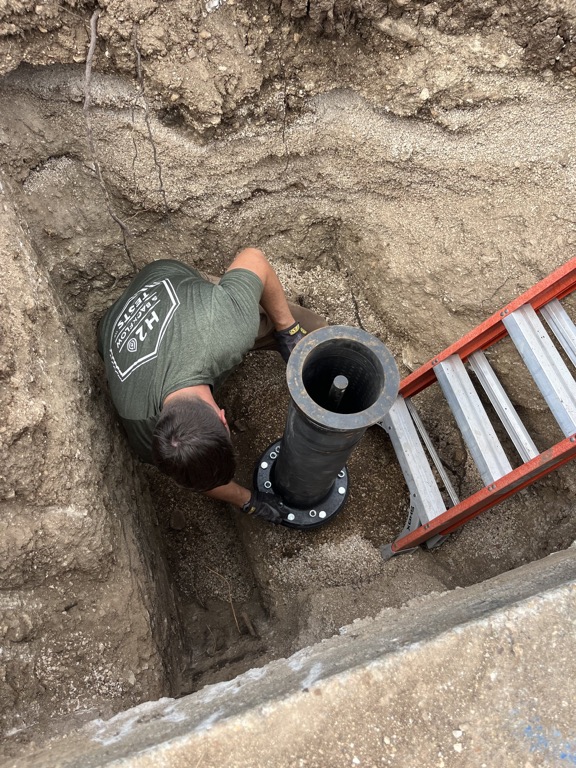
Licensed investigation and repair for private fire service mains, valves, leads, and connections.
View service →Central Texas coverage
Choose a city for local property context and related service information. Availability depends on scope, scheduling, and project requirements.
08 Start here
Send the Austin property address, hydrant count, and any inspection notice. We will confirm the test scope and scheduling.