Existing-condition review
Hydrant make, model, lead, valve, riser, bury depth, grade, access, plans, and prior test or repair information.
Private hydrant installation · Austin, Texas
H2O coordinates private hydrant installation and complete replacement from the below-grade connection through operational verification and project closeout.
Urgent fire-water issue? Call (512) 755-7318
Installation below and above grade
A private hydrant replacement can involve more than exchanging the visible barrel. The existing lead, isolation, riser, flange, bury depth, drainage, restraint, grade, access, and surrounding private fire-water system all shape the field scope.
H2O reviews the available plans and site conditions, coordinates the shutdown and excavation, prepares or repairs the approved underground connection, sets the hydrant to the required grade and orientation, and documents the work that can be verified in the field.
New systems and material changes may also require engineering, fire-sprinkler design, civil design, utility approval, permitting, inspection, flushing, or witnessed testing. Those responsibilities are identified before construction instead of being discovered after the hydrant is in the ground.
Field scope
The approved scope follows the system design, existing conditions, authority requirements, and licensed work boundary.
Hydrant make, model, lead, valve, riser, bury depth, grade, access, plans, and prior test or repair information.
Site contacts, impairment steps, valve control, utility locating, excavation access, soil handling, and work-zone protection.
Approved piping, fittings, flanges, restraints, riser components, drainage conditions, and connection repair within licensed scope.
Orientation, plumb, flange alignment, operating clearance, nozzle direction, grade relationship, caps, chains, and visible finish.
Leak and operational checks plus pressure, flushing, flow, witnessing, or certification coordination when required.
Inspection hold points, field photographs, material information, controlled backfill, restoration coordination, and final records.
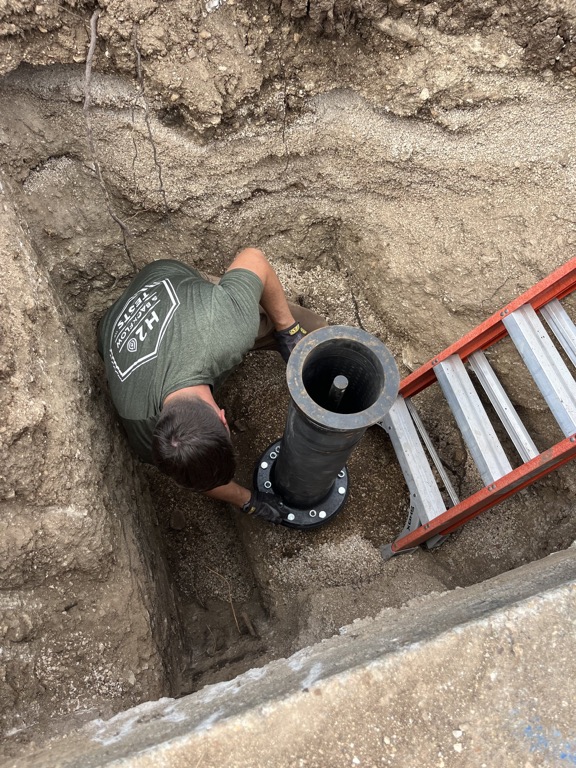
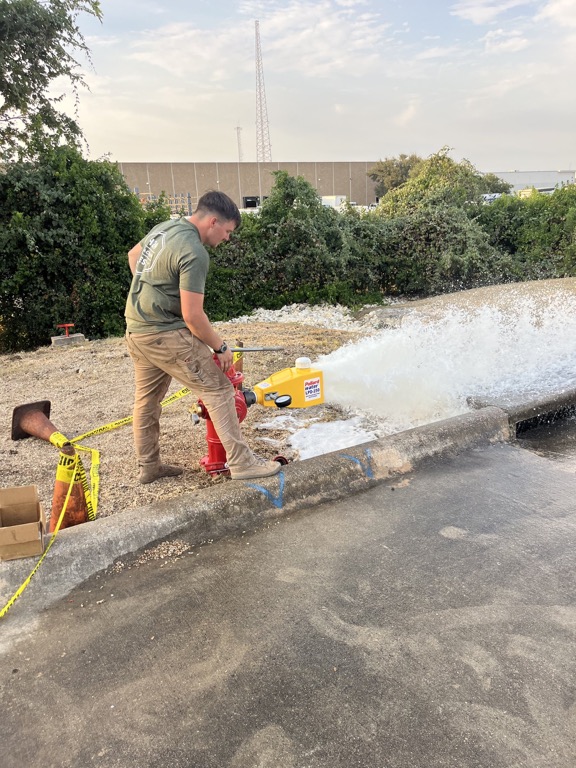
Real H2O field project · Central Texas
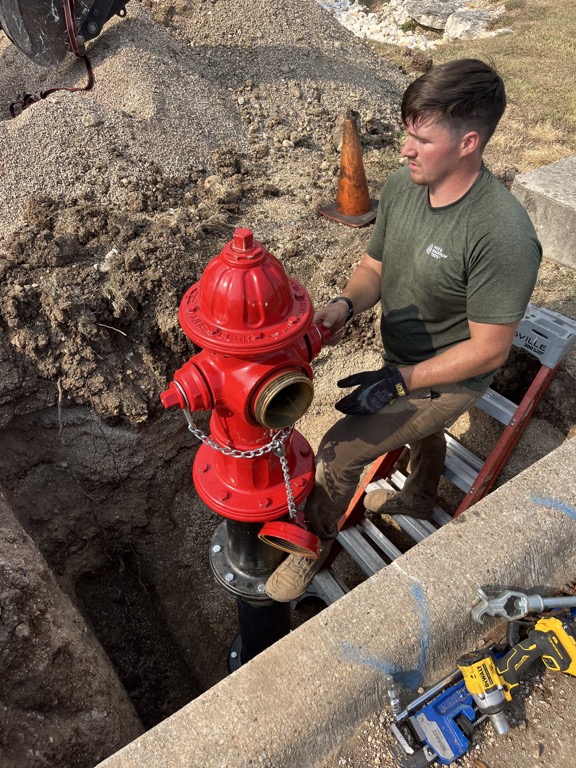
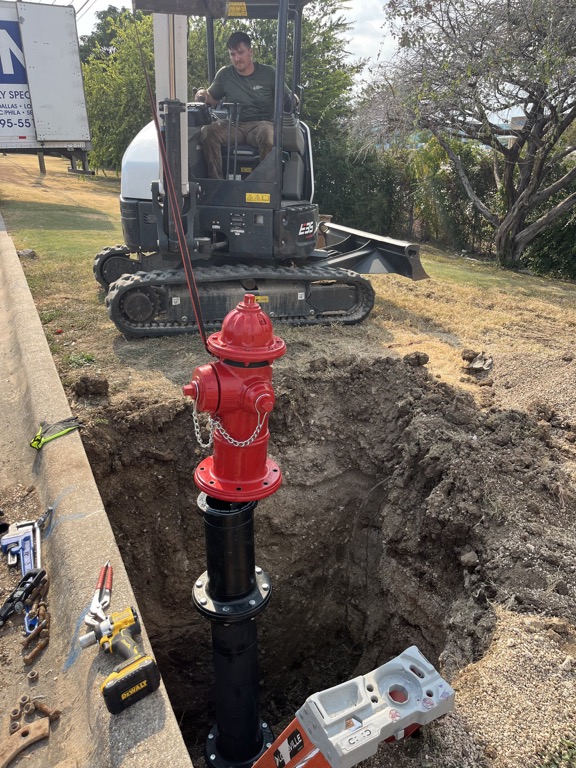
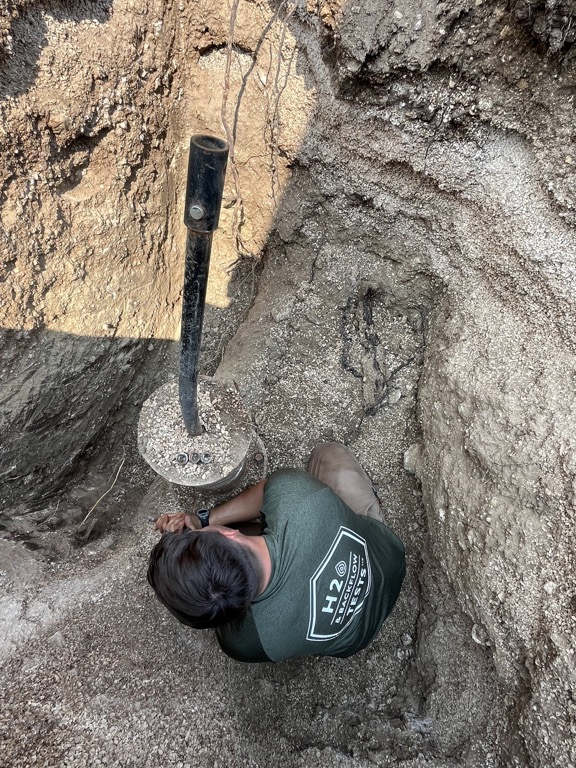
The same H2O field project shows the connection, riser, hydrant setting, and finished assembly as one connected installation—not four unrelated handoffs.
Actual H2O field work. Customer identity, exact site, and test readings are not published.
Field signals
The decision follows condition, parts availability, system needs, and the evidence found above and below grade.
Unavailable components or incomplete manufacturer support can make a dependable repair impractical.
Cracking, corrosion, repeated flange leakage, or impact damage can justify replacement instead of piecemeal service.
A leaking lead, riser, fitting, restraint, or flange may require excavation and a larger replacement boundary.
Recurring binding, leakage, drainage trouble, or unreliable shutoff can indicate that continued spot repair is not economical.
Paving, landscaping, access, vehicle protection, or finished-grade changes can require the hydrant setting to be corrected.
A new or modified private system may require a hydrant installation coordinated with the approved design and inspection path.
How H2O handles it
The install plan aligns ownership, design responsibility, shutdown control, excavation, materials, testing, and restoration.
We review ownership, drawings, hydrant and valve information, site access, required approvals, and the intended installation boundary.
The property, fire-protection contacts, utilities, excavator, inspection points, impairment steps, and material schedule are coordinated.
The approved underground work is exposed, prepared, repaired or installed, restrained, aligned, and documented within scope.
The hydrant is installed to the approved condition, checked for operation and leakage, tested as required, and handed off for closeout.
Properties we serve
H2O works with owners, property managers, facilities teams, contractors, and site contacts who need one accountable field partner.
Straight answers
Detailed answers for Austin property owners, facilities teams, HOAs, and commercial managers.
Ask H2O directly →Yes. H2O installs and replaces privately owned hydrants on commercial, multifamily, HOA, campus, warehouse, industrial, and private-development fire-water systems when the project falls within the approved and licensed scope.
Scope can include shutdown planning, excavation, removal, underground lead or riser work, restraints and flanges, hydrant setting, inspection coordination, testing, backfill, restoration coordination, and field documentation. The exact boundary is confirmed before work begins.
Yes, when the connection is within H2O's registered underground fire-water scope. Existing conditions and the approved design determine the piping, fittings, restraints, valves, and inspection path.
Some replacements can follow an existing approved configuration, while new systems, reroutes, material changes, or authority requirements may require engineering, fire-sprinkler design, civil design, or utility approval. H2O confirms that responsibility during intake.
The approved plans, manufacturer information, existing system, local requirements, finished grade, drainage conditions, connection type, and operating clearances guide selection and setting. H2O does not infer those details from the old visible barrel alone.
Usually some controlled isolation is required. The shutdown, impairment procedure, property notifications, site contacts, and return-to-service steps must be agreed before work begins.
H2O performs operational and leak verification and can perform or coordinate flushing, pressure, or flow testing required by the project, authority, approved design, or closeout plan.
Yes. H2O evaluates the visible damage and the underground connection before defining the replacement boundary. Impact and failed-test conditions can extend below grade.
Send the property address, site contact, photographs, hydrant make or model if known, drawings, prior test or repair records, reason for replacement, valve information, access constraints, timing, and any authority or contractor requirements.
One connected fire-water team
Move between the four fire-water service paths without starting the property story over with another contractor.
Inspection, operational checks, pressure and flow data, and reporting support.
View service →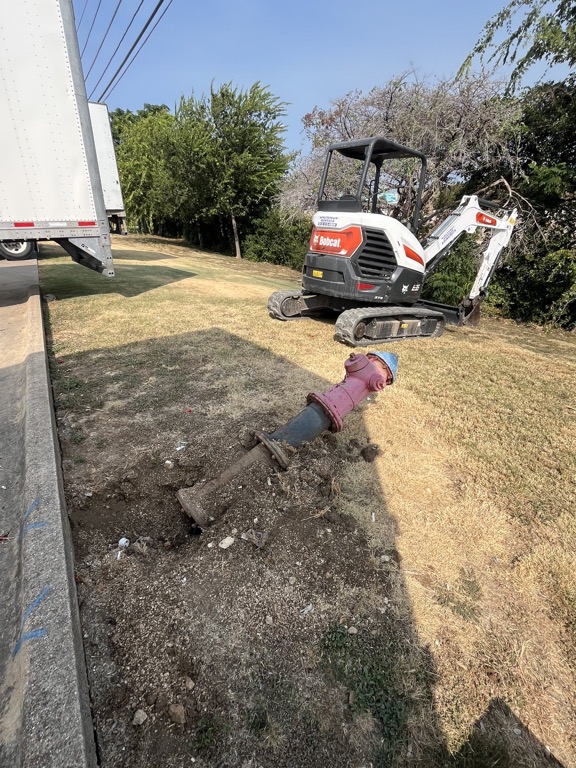
Diagnosis and repair for leaks, seized mechanisms, damaged components, and failed tests.
View service →
Private hydrant installation and complete replacement from connection through verification.
View service →
Licensed investigation and repair for private fire service mains, valves, leads, and connections.
View service →Central Texas coverage
Choose a city for local property context and related service information. Availability depends on scope, scheduling, and project requirements.
08 Start here
Send the Austin property address, photos, plans or prior reports, site contact, and target timing. We will define the installation and coordination path.