
Cap and nozzle leaks
Gaskets, cap threads, nozzle condition, chains, and sealing surfaces inspected and serviced as appropriate.
Private hydrant repair · Austin, Texas
A leaking, seized, damaged, or underperforming private hydrant needs a diagnosis—not a parts cannon. H2O traces the symptom, scopes the repair, and retests the result.
Urgent fire-water issue? Call (512) 755-7318
Repair the cause
A hydrant that leaks at a cap, binds at the operating nut, fails to drain, or will not shut down can often be repaired at the hydrant. Low flow, recurring leakage, or abnormal operation can also point to an isolation valve, connection, private fire service main, or wider system issue.
H2O starts with the failure information and the property context. We review the test result, operate and inspect the hydrant where safe, identify the probable repair boundary, and explain what can be handled immediately versus what requires parts, shutdown planning, excavation, or coordination.
Because H2O also works on underground fire-water infrastructure under its fire-sprinkler underground registration, the diagnosis does not stop automatically at grade. The recommendation follows the evidence and stays within the licensed scope.

Field scope
Hydrant makes, models, age, parts availability, isolation, and site conditions all affect the repair plan.
Gaskets, cap threads, nozzle condition, chains, and sealing surfaces inspected and serviced as appropriate.
Binding, excessive effort, damaged operating components, incomplete travel, or failure to open and close.
Visible cracks, impact damage, corrosion, flange leakage, or failed above-grade components.
Standing water, blocked drains, damaged drain components, soil conditions, or recurring barrel water.
Isolation, partially closed valves, connection problems, low-flow findings, or suspected underground restrictions.
Operational check, leak check, retest when required, documentation, and a clear return-to-service record.
Real H2O field project · Central Texas
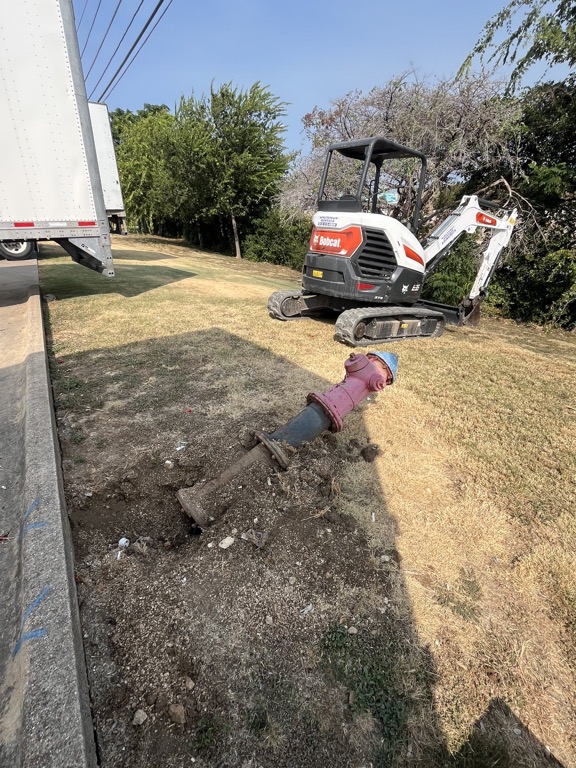
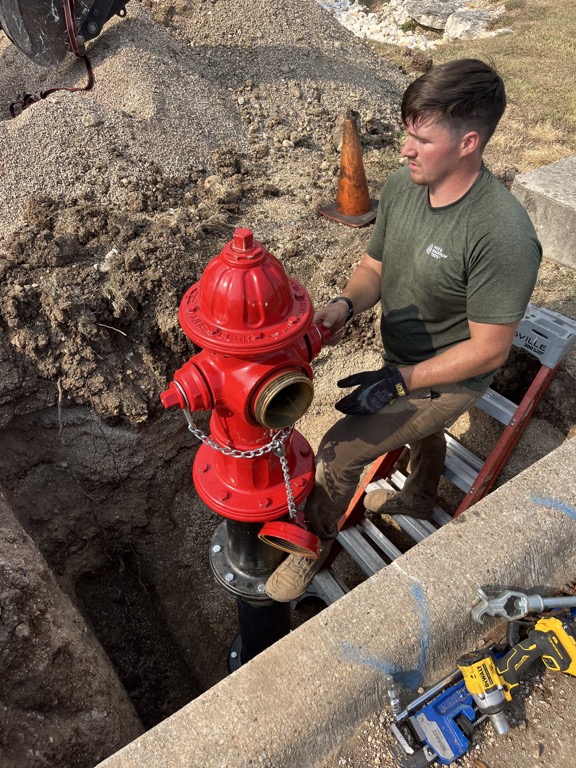
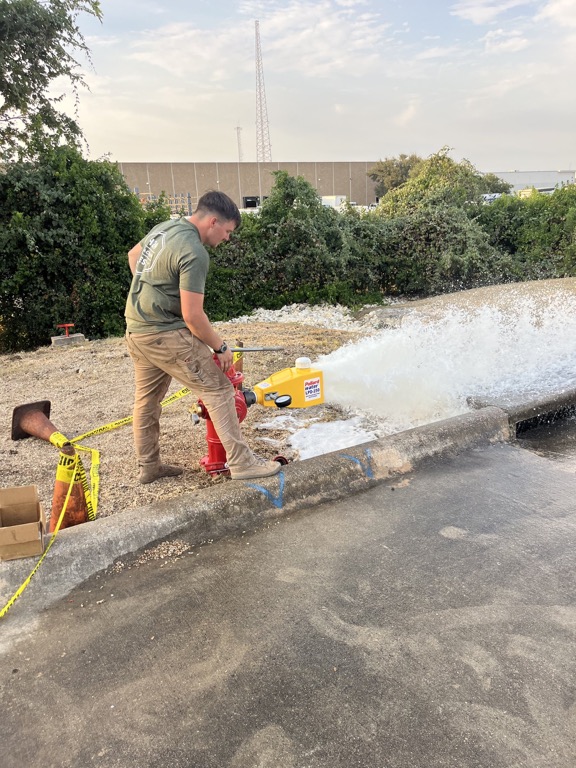
This replacement sequence moves from the existing hydrant and excavation through setting the new assembly and recording the finished condition.
Actual H2O field work. Customer identity, exact site, and test readings are not published.
Field signals
These symptoms deserve attention, especially when the hydrant protects an occupied or high-value property.
Continuous wet soil, pavement staining, or meter movement can indicate a hydrant, lead, valve, or underground leak.
A hydrant that continues flowing or leaking after operation may require controlled isolation and prompt service.
Forcing a stuck mechanism can increase damage. Stop and have the hydrant evaluated.
Missing caps, damaged threads, leaking gaskets, and deformed outlets can prevent reliable connection or sealing.
Even when the barrel looks upright, impact can affect flanges, valves, leads, and underground connections.
A major drop in available flow or unusual pressure behavior can be a system issue, not just a hydrant issue.
How H2O handles it
Private fire-water work affects life-safety infrastructure. The repair plan has to account for the system and the property.
We collect the test report, photos, hydrant information, leak history, site contact, and any impairment or deadline.
We inspect the hydrant and determine whether safe operation, isolation, shutdown coordination, or wider investigation is needed.
The approved work is completed at the hydrant, valve, connection, or underground line as the evidence and licensed scope require.
We verify operation, check for leakage, complete required retesting, and document the result and remaining recommendations.
Properties we serve
H2O works with owners, property managers, facilities teams, contractors, and site contacts who need one accountable field partner.
Straight answers
Detailed answers for Austin property owners, facilities teams, HOAs, and commercial managers.
Ask H2O directly →Yes. H2O diagnoses and repairs privately owned hydrants serving apartments, HOAs, commercial sites, campuses, schools, warehouses, industrial facilities, and private developments across Austin and Central Texas.
Yes. Send the failed test report and any photos. We review the failure, inspect the hydrant and surrounding system, scope the repair, and perform post-repair testing when required.
Common sources include cap gaskets, nozzle or thread damage, stem packing, internal valves, barrel or flange damage, drain components, the hydrant lead, or an underground valve or connection. A field diagnosis is needed before choosing the repair.
Often, but it should not be forced. The hydrant make, model, condition, parts availability, operating mechanism, and isolation options determine whether service, component replacement, or a larger repair is appropriate.
Treat uncontrolled flow or continuing leakage as urgent. Contact H2O with the property address and site contact. Safe isolation and the correct authority or property notifications may be required before repair.
H2O can evaluate full replacement when the barrel is damaged, parts are unavailable, the hydrant is obsolete, repair is uneconomical, or the underground connection also needs work. Replacement scope depends on the system, shutdown, excavation, and applicable requirements.
Yes, when the issue falls within H2O's licensed underground fire-line scope. H2O holds Sprinkler Certificate of Registration–Underground SCR-U-3496702 and can coordinate the hydrant and buried fire-water work as one project.
Minor service may be completed in one visit when the correct parts and isolation are available. Larger repairs can require parts sourcing, shutdown planning, excavation, traffic or access control, other contractors, and authority coordination.
Yes, when retesting is part of the applicable repair or compliance path. H2O verifies operation and leakage, gathers the required measurements, and records the post-repair result.
One connected fire-water team
Move between the four fire-water service paths without starting the property story over with another contractor.
Inspection, operational checks, pressure and flow data, and reporting support.
View service →
Diagnosis and repair for leaks, seized mechanisms, damaged components, and failed tests.
View service →
Private hydrant installation and complete replacement from connection through verification.
View service →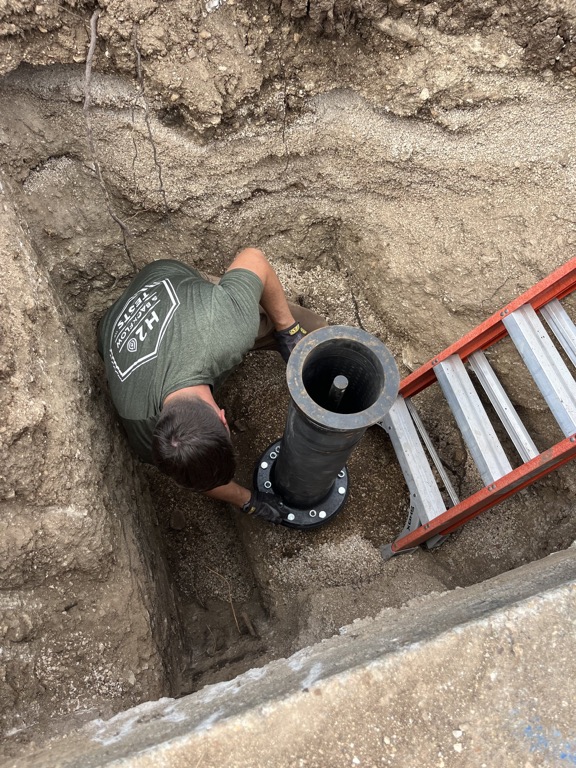
Licensed investigation and repair for private fire service mains, valves, leads, and connections.
View service →Central Texas coverage
Choose a city for local property context and related service information. Availability depends on scope, scheduling, and project requirements.
08 Start here
Send the test report, Austin property address, hydrant make or photos, and what the hydrant is doing. We will scope the next step.